
What Is the Wildland-Urban Interface (WUI) Fire Code?
The Wildland-Urban Interface (WUI) is where homes and development meet undeveloped wildland. If your project sits in a WUI area, the fire code adds requirements for ignition-resistant materials, defensible space, and fire department access, plus a fire-district review step before your building permit is approved. Here is what to expect and how to plan for it.

What does WUI mean?
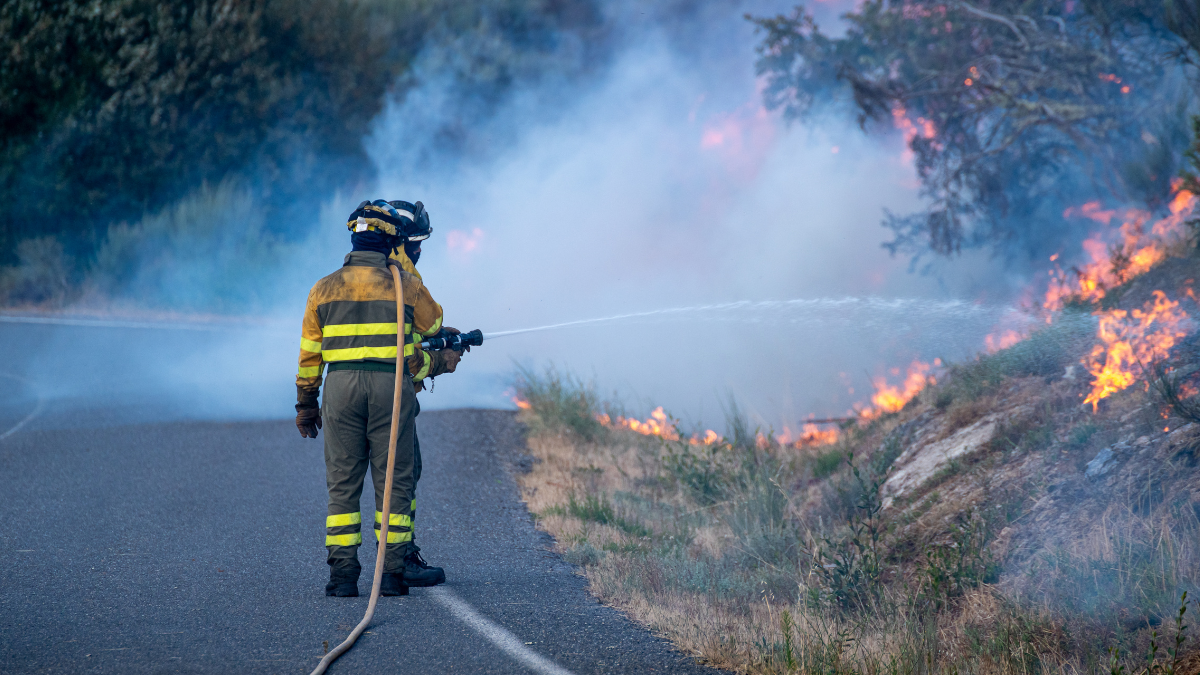
The Wildland-Urban Interface is the zone where structures and other human development meet or intermingle with undeveloped wildland and vegetative fuels. In plain terms, it is the edge where neighborhoods, homes, and buildings sit next to or among forests, brush, grasslands, and other natural fuel. When a wildfire reaches that edge, those structures are directly exposed.
It is easy to assume this only matters in remote mountain towns, but the WUI is far larger than most people realize. Roughly 99 million people, about a third of the US population, live in the WUI. More than 60,000 communities across the country are considered at risk, and the WUI continues to expand by about 2 million acres per year as development pushes further into natural areas. That growth is exactly why more jurisdictions are adopting and enforcing WUI building requirements, and why it is worth knowing whether your project falls inside one.
How the WUI fire code works
The WUI fire code is a set of building and land-use rules meant to keep structures from burning in a wildfire. Most jurisdictions base theirs on the International Wildland-Urban Interface Code, or IWUIC, which is published by the International Code Council. It is a model code, so it does not apply automatically. States, counties, and fire districts choose whether to adopt it.
It also does not replace the codes your project already has to meet. It sits on top of them. Your build still follows the standard building, residential, and fire codes, and the WUI code adds wildfire-specific requirements on top, mostly aimed at stopping a house from catching when embers and flames reach it.
The big thing to know before you design anything: this code is adopted locally, and the details vary a lot. Your fire district might enforce the 2018 edition with its own amendments. The next district over might be on the 2024 edition, or might not have adopted it at all. There is no single national WUI standard you can just build to. What actually applies is whatever your jurisdiction has on the books, which is why it pays to confirm it up front rather than find out at plan review.
How do you know if your project is in a WUI area?
Your local fire district makes the call, and most of them give you a way to check before you ever pick up the phone. A lot of jurisdictions publish WUI maps or parcel lookup tools where you punch in an address and see whether it lands inside the interface.
Sedona is a good example of how this works. The Sedona Fire District has adopted the IWUIC, and it offers a parcel search tool you can use to find out whether a specific address or lot sits within the district and the WUI. A few minutes with a tool like that tells you early whether the wildfire requirements are in play.
That early check matters more than it sounds. If your parcel is in the WUI, it changes what you can build and what materials you will need, so you want to know before plans are drawn, not after. Designing first and confirming later is how projects end up reworked at the worst possible time. If your jurisdiction does not have an online tool, a call to the local fire district or building department gets you the same answer.
What does the WUI code actually require?
The specifics depend on your jurisdiction and the hazard level of your parcel, but WUI requirements tend to fall into a few consistent buckets. Here is what you are generally looking at.
Ignition-resistant construction and materials
Most of the code is about keeping the building itself from catching. That usually means a Class A fire-rated roof, since the roof is the most vulnerable surface when embers are flying. From there it extends to ember-resistant vents, exterior walls that are noncombustible or fire-rated, and windows and doors built to resist heat and flame. The idea is to close off every easy way a wind-driven ember can get a hold on the structure.
Defensible space
WUI rules also govern the area around the building, not just the building. This is defensible space, a buffer where vegetation and other fuels are managed to slow a fire and give crews room to work. In practice that means clearing dead growth, thinning and spacing plants, and removing ladder fuels, the low vegetation that lets a ground fire climb into tree canopies. The required distances are set by your local code and adjusted for terrain, since a steep slope spreads fire faster than flat ground, so check the adopted code for the exact numbers in your area.
Access and water supply
A house can be built right and still be hard to defend if crews cannot reach it. WUI requirements often cover fire department access, including road width and clearance, along with clear road and address signage so responders can find the property fast. Many also address available water for suppression, which matters most in areas without a dependable hydrant system.
Sprinklers, spark arrestors, and other add-ons
Depending on the hazard zone, your project may need more. Some jurisdictions require automatic fire sprinklers in higher-risk areas, and spark arrestors on chimneys are common where wood-burning appliances are involved. What triggers these varies, which is another reason the locally adopted code is the only place to get a firm answer.
Does the WUI code apply to remodels and additions, or just new homes?
A lot of owners assume the WUI code only kicks in when you build from the ground up. That is a common and costly misread. In most jurisdictions it reaches further than new construction, covering additions and exterior alterations too.
Sedona is a clear case. In the Sedona Fire District, the WUI standards apply to all new structures and to all additions and exterior alterations within the WUI district, not just brand-new homes. So if you are adding a room, reworking an exterior wall, or making other outside changes to an existing house, the wildfire requirements can come into play.
There are some exceptions. Small detached accessory structures are sometimes exempt depending on their size and how far they sit from other buildings, but the thresholds for that vary by jurisdiction. If your project is anything more than minor, assume the code may apply and confirm with your local fire district before you start, rather than betting on an exemption that might not hold.
How the WUI code affects your permit and timeline
Building in a WUI area adds a step. On top of the standard building permit, your plans go through a fire-district review that checks them against the adopted WUI requirements. That review is its own approval, and your building permit does not move forward until the fire side signs off.
This is where projects stall. If the plans come in missing a required roof class, the right wall assembly, or adequate defensible space, the fire district sends them back for changes and you resubmit. Each round of corrections burns time, and the costs pile up while the project sits, financing, labor scheduling, and resubmittal fees that have nothing to do with the actual construction. A single round of WUI rejections can push a start date out by weeks.
The frustrating part is that almost all of it is avoidable. The requirements are knowable up front. When the plans are designed to the adopted WUI code from the start, the review clears quickly and the permit keeps moving.
Building in a WUI area without the delays
The way you avoid the back-and-forth is to treat the WUI requirements as a starting condition, not a surprise at review. That means confirming the parcel's status before anything gets drawn, designing to the adopted code from the first set of plans, and walking into fire-district review with everything it expects already in place.
That is a lot to track, especially if you build across more than one jurisdiction where the adopted edition and amendments are not the same. It is the kind of work a permitting partner handles day in and day out: checking whether a parcel falls in the WUI, making sure the plans meet the local standards for materials, defensible space, and access, and clearing the fire-district review without repeat trips. Our design and consulting and residential permitting teams do exactly that, so the wildfire requirements get built into the plan instead of bolting on corrections later.
If you are building around Prescott, Sedona, Flagstaff, or anywhere else in Arizona's fire-prone country, that early legwork is what keeps a project on schedule.
Key takeaways
The Wildland-Urban Interface (WUI) is where homes and development meet undeveloped wildland, and it covers far more of the country than most people think.
The WUI fire code is adopted locally, so whether it applies, and which edition and amendments are in force, depends entirely on your jurisdiction.
It requires ignition-resistant construction like Class A roofs and fire-rated materials, managed defensible space around the structure, and adequate fire department access and water supply.
It is not just for new homes. In many areas, including Sedona, it also applies to additions and exterior alterations.
WUI projects add a fire-district review on top of the standard building permit, so confirming your parcel's status and designing to the local code early is what keeps the permit on schedule.
Frequently asked questions
-
WUI stands for Wildland-Urban Interface.
It refers to the area where homes and other development meet or intermingle with undeveloped wildland and vegetative fuels, which is where structures are most exposed to wildfire. -
The WUI fire code is a set of building and land-use requirements meant to keep structures from igniting during a wildfire.
Most jurisdictions base theirs on the International Wildland-Urban Interface Code (IWUIC), which supplements the standard building and fire codes.
Because it is adopted locally, the exact requirements and edition vary by jurisdiction. -
Your local fire district makes the determination, and many publish WUI maps or parcel lookup tools where you can enter an address and check.
If your jurisdiction does not have an online tool, the local fire district or building department can confirm it for you.
It is worth checking before you design, since being in the WUI affects what you can build. -
Defensible space is a managed buffer around a structure where vegetation and other fuels are reduced to slow a fire and give crews room to work.
It typically involves clearing dead growth, spacing and thinning plants, and removing ladder fuels.
The exact distances are set by your local adopted code and adjusted for terrain, since steeper slopes spread fire faster. -
Often, yes. In many jurisdictions the code applies not just to new construction but to additions and exterior alterations as well. In the Sedona Fire District, for example, the standards apply to all new structures and all additions and exterior alterations within the WUI district.
Small detached accessory structures are sometimes exempt depending on size and distance, but confirm with your fire district before assuming an exemption. -
WUI areas typically require a Class A fire-rated roof, the highest fire-resistance rating, because the roof is one of the most vulnerable parts of a home when wind-driven embers are landing.
Specific requirements vary by jurisdiction, so check your locally adopted code for the exact standard.
Ready to build in a WUI area without the delays?
Call 845-PERMITS for a free quote, or submit our quote form and we will handle the fire-district review and permitting for you.