
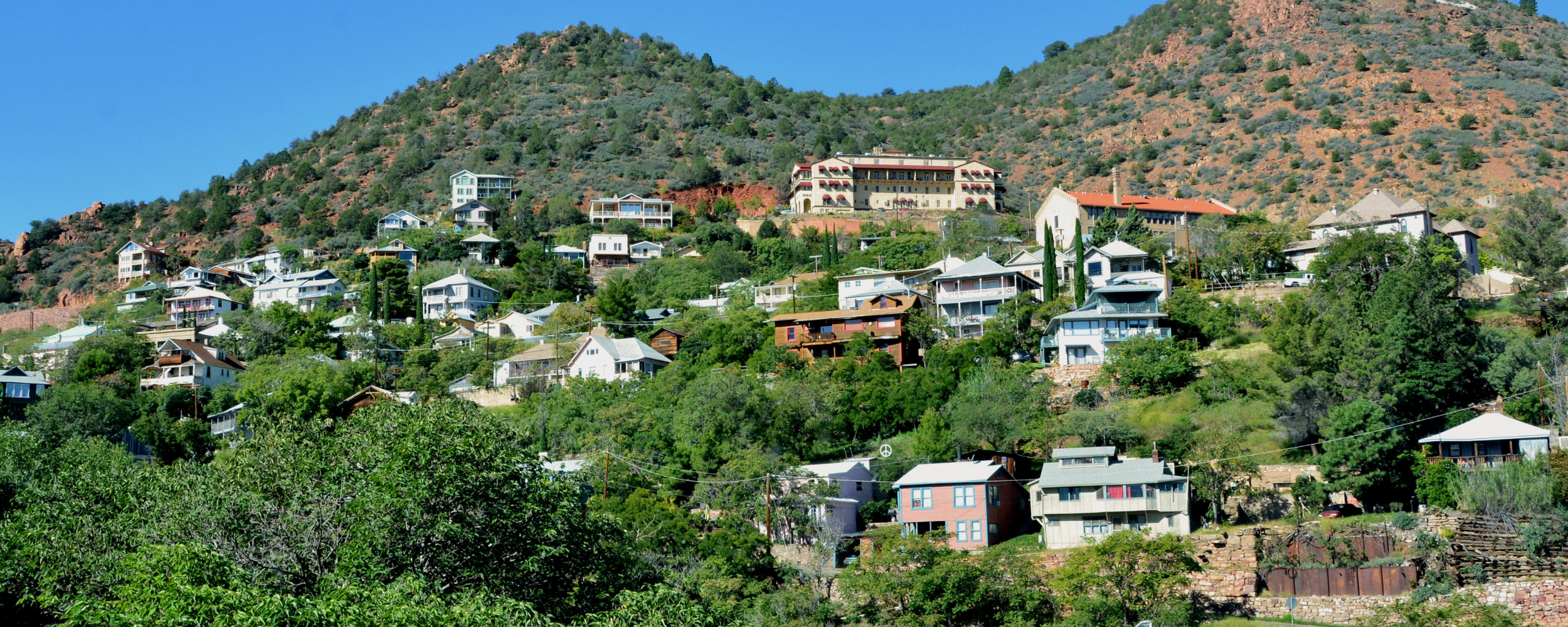
Yavapai County Permit Resource Center
Everything you need to know about permits, timelines, and approvals
Yavapai County spans more than 8,000 square miles of central and northern Arizona. Building permits within the cities and towns of Prescott, Prescott Valley, Sedona, Cottonwood, Chino Valley, Camp Verde, Clarkdale, Jerome, and Dewey-Humboldt are issued by each municipality. Everything outside those boundaries falls to Yavapai County Development Services.
Terrain across the county varies widely, which means floodplain regulations, septic systems, increased snow loads and rural fire district reviews can all factor in. Permit Pushers coordinates with the county and applicable cities so projects keep moving.
Permits in Yavapai County, Arizona
On this page
Permitting Authorities across Yavapai County
Yavapai County permits are managed by Development Services, which is organized into several specialized units that handle different aspects of the review process. Depending on project type and location, additional state, county, and local agencies may also be involved.
-
Yavapai County Development Services handles building permits, planning and zoning, and environmental review for all unincorporated areas.
The department is divided into multiple units, including Customer Service and Permitting, Planning and Zoning, Building Safety, Environmental Services, Public Works, and Addressing.
Applications are submitted through the county's Citizenserve online portal. -
The Environmental Services Unit handles septic, well, and wastewater permits under authority delegated by the Arizona Department of Environmental Quality.
Environmental Services handles permits in both incorporated and unincorporated areas within the county. -
The Flood Control District reviews development plans and subdivision proposals related to floodway, floodplain, and flood hazard areas.
Projects within mapped floodplains require additional documentation and review. -
Public Works issues Right of Way and Access Permits for any encroachment or work within county-maintained roadways. This includes driveways, utilities, mailboxes, and landscaping within the right of way.
-
Fire code review and inspection for projects outside city limits is handled by local rural fire districts, including Central Arizona Fire and Medical Authority (CAFMA), Verde Valley Fire District, Williamson Valley Fire District, and others depending on the project location.

Yavapai County Zoning Information
Before applying for a permit in an unincorporated area, you need to confirm the property is zoned for the intended use. Yavapai County zoning is governed by the Yavapai County Planning and Zoning Ordinance, most recently amended in July 2025 and originally adopted in 1968.
The county uses a two-part zoning system that combines a Use District (what can be built) with a Density District (lot size and intensity), giving zoning designations like RCU-2A or C1-3.
Common Use Districts include:
RCU Rural Conservation Unit: The default zoning for unincorporated areas, allowing low-density rural residential use.
R1, R1L, R2 Residential: Single-family and limited multi-family residential districts at varying intensities.
RS Residential and Services: Mixed residential and limited service uses.
C1, C2, C3 Commercial: Commercial districts ranging from neighborhood-scale sales and services to general commercial with minor industrial uses.
PM Performance Industrial, M1 Industrial: Districts for industrial and manufacturing development.
Overlay Zones: Include floodplain, hillside, and dark sky lighting standards that apply alongside the underlying district.
A major zoning rewrite is currently underway. In 2025, the Board of Supervisors awarded a contract to update the Zoning Ordinance and Subdivision Regulations, with the new code expected to take effect by November 2027. Projects in planning stages should keep this transition in mind, as zoning categories, allowed uses, and approval pathways are all expected to change.
Zoning information for a specific property can be researched through the Yavapai County Interactive Map.
Yavapai County Building Code
Building codes in Arizona are adopted at the local jurisdiction level. For unincorporated areas of Yavapai County, the Board of Supervisors adopts the International Code Council's model codes along with local amendments.
Yavapai County currently enforces the 2024 International Building Code along with amendments approved by the Board of Supervisors. The adopted code suite also includes the 2024 International Residential Code, 2024 International Fire Code, 2024 International Plumbing, Mechanical, and Fuel Gas Codes, and the 2023 National Electrical Code. Local amendments address county-specific conditions including floodplain regulations, wildland fire hazards, and septic system requirements.
Construction projects in Yavapai County must also comply with statewide code requirements adopted by the State of Arizona.
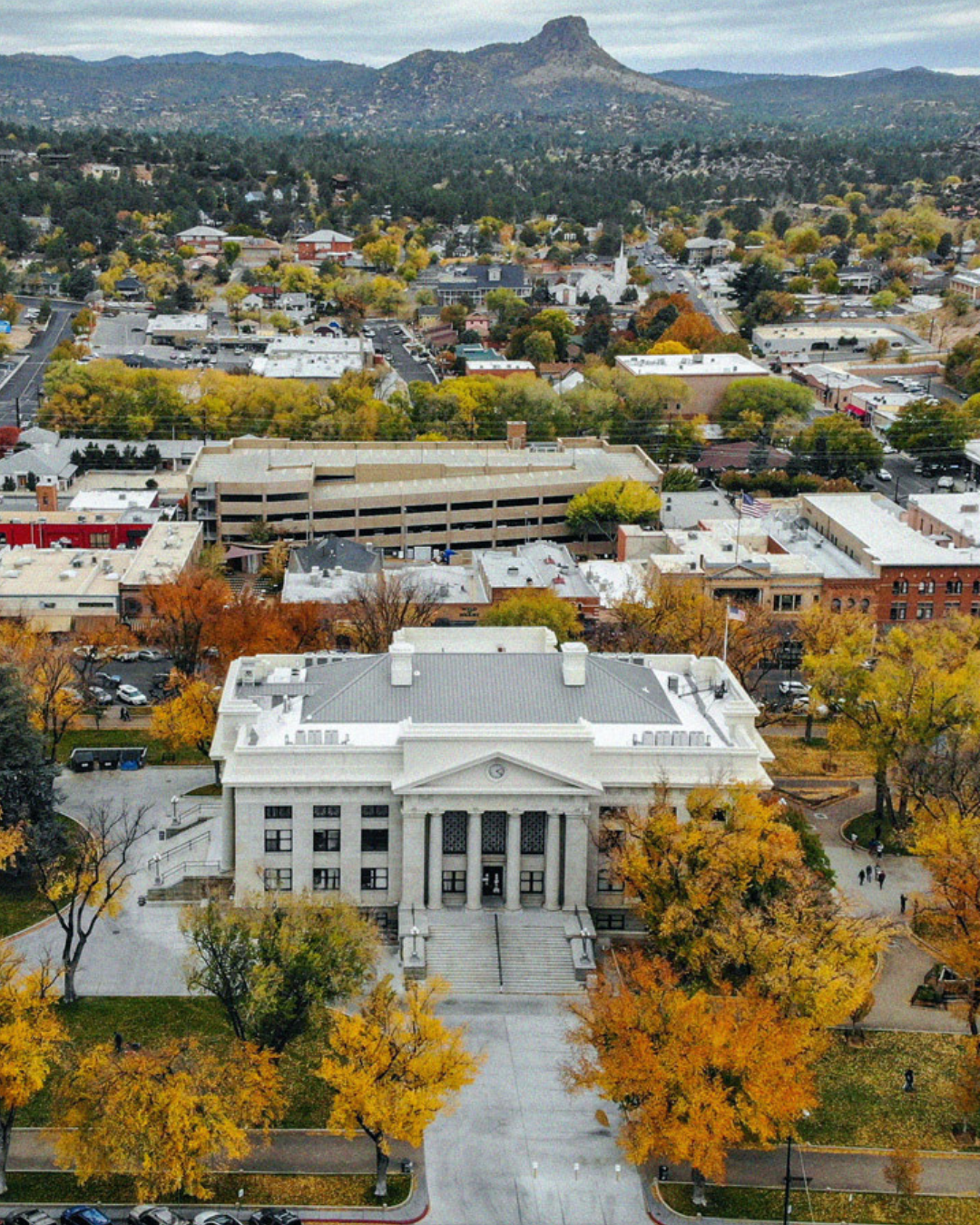
Yavapai County Permit Approval Timeframe
In 2001, the Yavapai County Board of Supervisors implemented a One Stop Permit Process administered by the Customer Service and Permitting Unit. This coordinates reviews across all county departments so applicants work through a single point of contact.
Applications are submitted through the Citizenserve online portal, where a Permit Technician reviews each one for completeness. Standard permit processing takes a minimum of 10 to 15 days once all documents and initial payment are received. Commercial projects and alternate construction methods can take longer.
For complex commercial projects, the county offers an optional Preliminary Code Review, allowing departments to provide direction before detailed drawings are prepared.
Once issued, permits require construction progress within 180 days and continued inspections every 180 days to stay active. Up to two extensions of 180 days each can be granted, with permits expiring entirely after 3.5 years.
Step-by-Step: How to Get a Permit in Yavapai County
1. Confirm jurisdiction: Verify your property is in unincorporated Yavapai County rather than within a city or town. Projects inside city limits go through that municipality's permitting department.
2. Determine your permit type: Yavapai County issues building permits, residential and commercial permits, grading permits, right of way and access permits, home occupation permits, and environmental permits for septic and wells.
3. Consider a Preliminary Code Review: For commercial projects, this optional pre-application step lets county departments and other agencies review the proposal before detailed plans are prepared.
4. Address septic and environmental requirements early: Properties without sewer access typically need an approved septic location before building plans can be reviewed. Septic permits go through the Environmental Services Unit and can take several weeks to process.
5. Set up your Citizenserve account: All applications are submitted through the county's online portal. The applicant, property owner, or listed contractor needs an account tied to the project email.
6. Prepare your plans: Construction documents must meet the 2018 International Building Code, county amendments, and any applicable floodplain, hillside, or dark sky lighting standards.
7. Submit your application: Upload plans and supporting documents through Citizenserve. A Permit Technician reviews the submission for completeness and notifies you through the portal.
8. Complete payment: Once the application is deemed administratively complete, payment is required within seven days to begin the review process.
9. Plan review: The Building Safety Unit and other applicable units review the application as part of the One Stop Permit Process. Standard processing aims for a minimum of 10 to 15 days, with longer timeframes for commercial or complex projects.
10. Respond to corrections: Reviewers issue comments through the portal. Rechecks are generally handled by the original plans examiner within two business days of resubmittal.
11. Pay final fees and pull the permit: Once review is complete, final permit fees are applied. Permits must be printed and posted on site before construction begins.
12. Inspections and progress requirements: Inspections are scheduled through the Citizenserve portal. Building inspections require one day advance notice. Environmental inspections take up to five business days and follow regional schedules.
13. Permit close-out: Permits stay active as long as inspections are passed every 180 days. Final inspection closes the permit and confirms the work is complete and code-compliant.
Speeding Up the Permit Process in Yavapai County
Properties without sewer access need an approved septic location through Environmental Services before building plans can be reviewed.
Resolve Septic Before Building Plans
This optional step lets multiple county departments review the proposal before detailed plans are prepared, catching issues while changes are still inexpensive.
Use the Preliminary Code Review
Permit Pushers is headquartered in Prescott and works directly with Yavapai County Development Services, Environmental Services, and rural fire districts throughout the county to keep projects moving from application to issuance.
Local Permit Expediting
How Much Do Permits Cost in Yavapai County?
Yavapai County calculates building permit fees based on project valuation, which factors in the square footage of livable space, garage, patio, electrical, plumbing, and other project elements. Plan review fees are typically charged in addition to permit fees, generally at 50 percent of the permit fee for one and two family dwellings and 65 percent for commercial projects.
The county also charges a Roadway Development Fee (impact fee) of $3,400 per dwelling unit for new development in unincorporated areas. This applies to single-family residences, both manufactured and site built, and is assessed in addition to standard permit fees.
General ranges to budget for:
Simple residential permits (water heater, HVAC swap, minor electrical): $100 to $500
Mid-size residential projects (room addition, remodel): $500 to $3,000
Commercial tenant improvements: $2,000 to $15,000+
New commercial construction: $10,000 and up
Septic permits, well permits, and other environmental approvals are issued separately by the Environmental Services Unit and have their own fee structure. Right of way and access permits issued by Public Works also carry separate fees. The county fee schedule was updated in January 2025, so it's worth checking the current schedule before budgeting.
Get a free quote if you want a clearer estimate for your specific project.
Frequently Asked Questions
-
Property location determines jurisdiction. Projects inside the city limits of Prescott, Prescott Valley, Sedona, Cottonwood, Chino Valley, Camp Verde, Clarkdale, Jerome, or Dewey-Humboldt are permitted by that municipality.
Anything outside those boundaries is handled by Yavapai County Development Services.
Septic and well permits are always handled by Yavapai County Environmental Services, even for properties inside city limits. -
The One Stop Permit Process was implemented by the Yavapai County Board of Supervisors in 2001.
It coordinates reviews across all county departments through a single
Customer Service and Permitting Unit, so applicants don't need to navigate Building Safety, Environmental Services, Public Works, and Planning and Zoning independently.
Submittals and communication run through one team and one portal. -
Properties without sewer access need an approved septic location before building plans can be reviewed.
Septic permits go through the Environmental Services Unit and can take several weeks to issue, depending on workload and site conditions.
Starting the septic process early prevents it from becoming a hold on the building permit later. -
In 2025, the Board of Supervisors awarded a contract to update the Yavapai County Zoning Ordinance and Subdivision Regulations for the first time in over a decade.
The new code is expected to take effect by November 2027 and will reorganize zoning districts, allowed uses, and approval pathways.
Projects in early planning stages should account for the possibility that current zoning categories may change. -
Permits become invalid if construction does not begin within 180 days of issuance, and a passed inspection is required every 180 days thereafter to keep the permit active.
The Chief Building Official can grant up to two 180-day extensions in writing.
Permits expire entirely 3.5 years from the original issue date, including all extensions.
Contact us for your free quote!
Still have questions about your project? We're happy to talk it through.
info@permitpushers.com
845-PERMITS
(845) 737-6487