
What the 21st Century ROAD to Housing Act Means for Manufactured and Multifamily Housing
The 21st Century ROAD to Housing Act became law in July 2026 with the goal of lowering housing costs. Two of its biggest changes are ending the permanent chassis requirement for manufactured homes and directing HUD to develop new federal guidelines for single-stair multifamily buildings. The two changes covered here still require federal implementation, state certification, or local code adoption, so their practical effects will phase in over time.

What is the 21st Century ROAD to Housing Act?
The 21st Century ROAD to Housing Act is a major bipartisan housing law that became law on July 11, 2026. It bundles provisions from dozens of separate bills with a shared goal of increasing housing supply and bringing down costs. Many of its provisions direct the Department of Housing and Urban Development (HUD) to write rules and guidelines, so the effects will roll out over the coming years rather than taking hold immediately.
The end of the permanent chassis requirement for manufactured homes
For decades, federal rules required every manufactured home to be built on a permanent chassis, the steel frame or undercarriage that the home is constructed on and sits on once it is placed. The ROAD to Housing Act changes that. It rewrites the federal definition of a manufactured home from one built "on a permanent chassis" to one built "with or without a permanent chassis." It is a small wording change with big implications for how these homes can be designed, sited, and financed.
Why the chassis rule mattered
The permanent chassis was one of the main reasons manufactured homes have long been treated as a separate category from site-built houses. That steel frame underneath affected how the home looked once installed, how it sat on a lot, and how lenders and appraisers valued it, which often meant less favorable financing than a comparable site-built home. It also limited design. Building everything on top of a permanent chassis constrains what a factory-built home can be, which is part of why manufactured housing has stayed largely single-story and visually distinct.
What removing it could unlock
Removing the chassis requirement could allow manufactured homes to look and sit more like site-built houses while reducing some of the legal and regulatory distinctions that affect financing. Over time, that could influence how buyers, lenders, insurers, and appraisers evaluate them, although the law does not guarantee equivalent financing terms. The bigger opportunity is in what it allows builders to produce.
Without the permanent chassis mandate, manufacturers may have greater flexibility to explore new building formats, potentially including broader multifamily applications as HUD develops the necessary standards. Because the HUD Code applies nationally rather than varying by locality, factory builders can achieve economies of scale that are hard to match with site-built construction, and those efficiencies could help reduce production costs, although buyer savings will depend on implementation, financing, land, and local requirements.
The catch: it is not immediate
The definition changed in the law, but the change did not become operational nationwide as soon as the law took effect. HUD still has to implement it through rulemaking. On top of that, each state has to certify that its laws treat manufactured homes without a permanent chassis consistently with those built on a permanent chassis, making updates where necessary. If a state does not certify by the required deadline, chassis-free manufactured homes could actually be blocked from being built, installed, or sold there. So the timeline and the on-the-ground reality will vary from state to state, which makes it worth watching how your state responds rather than assuming the change applies everywhere at once.
New federal support for single-stair (point-access block) buildings
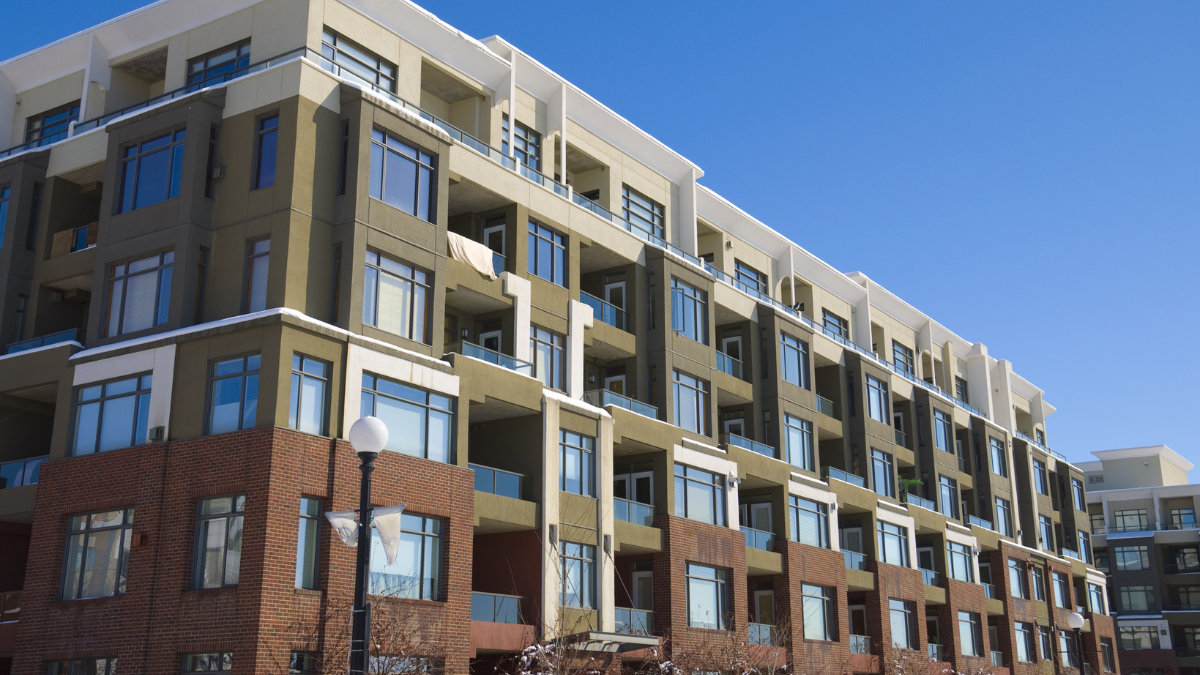
The other big affordability change targets multifamily buildings. Under the model building codes most jurisdictions use, a residential building above three or four stories generally has to include at least two separate exit stairways. The ROAD to Housing Act directs HUD to develop guidelines for what the law calls point-access block buildings, which allow a single internal stairway to serve all the units in a building up to six stories tall. It also directs HUD to work with the International Code Council to encourage adding these provisions to the International Building Code, the model code many jurisdictions build from.
Why single-stair matters for cost and design
Two stairways take up a meaningful amount of floor space on every level, space that cannot be used for living area. On a smaller lot, that requirement can make a project financially unworkable or rule it out entirely. Allowing a single, well-designed stairway frees up that floor area, which makes better use of small and narrow lots and leaves room for larger, family-sized units instead of a floor full of small ones. Fewer required stairways can also mean lower construction cost per unit. Countries and a handful of US jurisdictions that already allow single-stair buildings have used them to produce exactly these kinds of homes, and the law is aimed at making that more feasible across the country.
The catch: still local and advisory
As with the chassis change, this is not a switch that flips nationwide. The HUD guidelines are advisory, and they do not override state or local building codes. Each jurisdiction still decides whether to adopt single-stair provisions, and the change would only become buildable where local officials take it up. The law also lets HUD award competitive grants for pilot projects to test the safety and feasibility of these buildings, but that grant authority sunsets after seven years. So this is best understood as federal encouragement and a framework, not a new nationwide rule that automatically applies to projects today, and whether it reaches your projects will depend on how your state and city respond.
What this means for builders, developers, and homeowners
The takeaway is that both changes are intended to remove barriers that can increase housing costs, but neither provision creates a new nationwide code path that every project can use today. The chassis reform requires HUD implementation and state certification, while the single-stair provision requires HUD guidelines and voluntary adoption by individual jurisdictions.
For the near term, that means a couple of practical things. Plan your current projects around the code that is actually in force in your jurisdiction today, not a code change that may be adopted in the future. At the same time, keep an eye on how your state and locality respond, because that is where these changes become buildable. The chassis reform in particular will move at different speeds in different states, depending on how quickly each one submits the required certification, and the single-stair guidelines will only matter for your projects if your local jurisdiction chooses to adopt them.
For homeowners and buyers, the practical effect is further out but worth watching. As chassis-free manufactured homes enter the market, they may look and sit more like site-built houses and could narrow some of the differences in valuation and financing over time. That could create more housing options at lower prices, but the results will depend on implementation, state laws, financing, land costs, and local requirements.
How the permitting landscape changes (and how we help)
Here is the throughline running under all of this. Federal policy is shifting toward cheaper, more flexible housing, but permits are still issued locally. That does not change. What changes is that the rules will start to differ more from state to state and city to city as these provisions phase in, and for a while the map will be uneven.
The chassis reform makes that especially clear. Because it depends on each state submitting the required certification and making any necessary legal or regulatory updates, chassis-free manufactured homes may be buildable in one state well before a neighboring one catches up. Single-stair buildings will follow a similar pattern, allowed wherever a jurisdiction adopts the guidelines and not where it has not. For anyone building across more than one market, that patchwork is a real thing to manage, since a project that pencils out in one state may hit a wall in another simply because of where each jurisdiction stands.
Tracking that state-by-state and city-by-city picture is exactly what a nationwide permitting partner does. We follow which jurisdictions have adopted what, route each project through the rules actually in force where it is being built, and keep manufactured, modular, residential, and commercial projects moving as the landscape shifts. If you are planning around any of these changes, our manufactured and modular home, residential, and commercial permitting teams can help you build to the rules that apply today while you plan for what is coming.
Key takeaways
The 21st Century ROAD to Housing Act ends the permanent chassis requirement for manufactured homes, potentially allowing them to look and sit more like site-built houses while reducing some of the regulatory distinctions that affect financing.
It also directs HUD to develop new federal guidelines for single-stair (point-access block) buildings up to six stories, rather than the two-stairway requirement most codes impose today.
Both changes aim to lower housing costs by cutting regulatory and design barriers that add expense and limit what can be built.
Neither change creates a broadly usable nationwide construction pathway yet. The chassis reform requires HUD implementation and state certification, while the single-stair provision requires HUD guidelines and voluntary adoption by individual jurisdictions.
The chassis change also depends on each state submitting the required certification and making any necessary legal or regulatory updates, so the timeline will vary from state to state.
Frequently asked questions
-
It is a major bipartisan housing law that became law in July 2026. It bundles provisions from dozens of separate bills with the shared goal of increasing housing supply and lowering costs.
Most of its provisions direct HUD to write rules and guidelines, so the effects will phase in over the coming years. -
Yes. The law rewrites the federal definition of a manufactured home from one built on a permanent chassis to one built with or without a permanent chassis.
This could allow chassis-free manufactured homes to look and sit more like site-built houses while creating greater flexibility for future factory-built housing designs.
However, the law does not guarantee equivalent financing or explicitly authorize multistory HUD Code homes.
The change still requires HUD to implement it and each state to update its own laws. -
Not automatically. The law directs HUD to create guidelines for single-stair, or point-access block, buildings up to six stories and to encourage the International Code Council to add them to the model building code.
But those guidelines are advisory and do not override state or local codes, so single-stair buildings only become buildable where a jurisdiction chooses to adopt the change. -
The chassis reform requires HUD to develop revised standards and states to certify that their laws treat chassis-free manufactured homes consistently.
The single-stair provision requires HUD to issue federal guidelines, but individual jurisdictions will still decide whether and how to incorporate them into local building codes. -
Over time, it could make chassis-free manufactured homes and other emerging factory-built housing designs permittable in more places, but permits will still be issued locally.
As the chassis reform phases in, whether a chassis-free home can be built, installed, or sold will depend on where each state stands, so the permitting picture will differ from one market to the next.